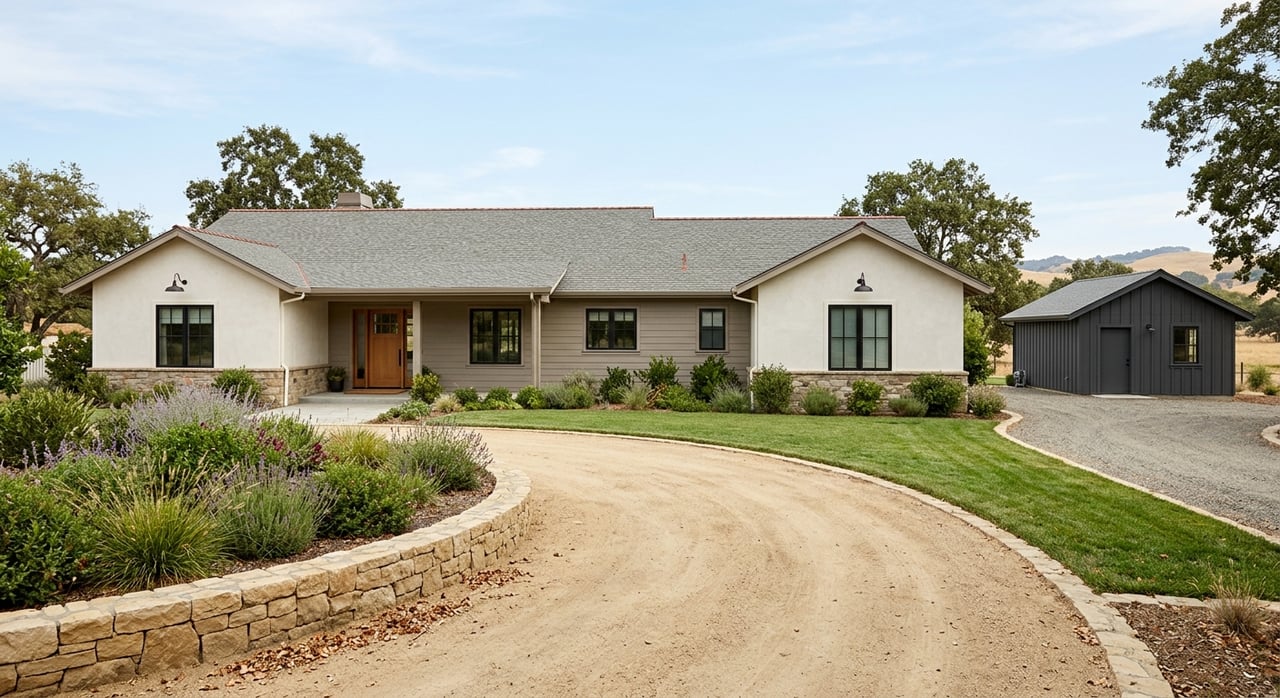
If you are getting ready to sell acreage or a ranch property in Santa Margarita, you already know buyers look beyond square footage and finishes. They want to understand how the property works day to day, from water and septic to access and fire safety. With the right preparation, you can present your property clearly, reduce surprises, and build buyer confidence before the first showing. Let’s dive in.
Why sale prep matters in Santa Margarita
In Santa Margarita, preparing a rural property for sale is about more than curb appeal. County sources show that water, drainage, flood control, vegetation and debris control for fire safety, and preserving a neat rural appearance are all active local concerns.
That matters because buyers often evaluate the land, systems, and access just as closely as the home itself. On acreage, a strong first impression comes from a property that looks cared for and a listing that answers practical questions early.
Focus on access first
For many Santa Margarita properties, the driveway tells an important story. A rough entrance, overgrown approach, or unclear turnaround area can raise concerns before a buyer even reaches the house.
The County Fire Marshal reviews unincorporated projects for fire apparatus access and water supply, and county fire standards address roads, driveways, gates, turnarounds, road slope, and curves. That is why one of the smartest pre-sale steps is making sure your access route is clear, usable, and easy to inspect.
Improve the driveway approach
Start with the basics. Trim back vegetation along the drive, repair obvious ruts, and make gates easy to open and pass through.
If there are drainage issues, address them before they become a showing-day distraction. If you are considering work in the county right of way, County Public Works requires an encroachment permit, so it is wise to confirm requirements before starting improvements.
Make emergency access easy to understand
Buyers often want to know whether emergency vehicles can reach the home without difficulty. A clean, visible route with reasonable turnaround space helps support that conversation.
You do not need to overbuild to improve presentation. In many cases, simply creating a clear, maintained approach helps your property feel more functional and better cared for.
Address vegetation and fire safety early
In Santa Margarita, fire safety is not a side issue. It is often one of the first things serious buyers ask about, especially on larger parcels.
CAL FIRE and the County describe defensible space as a 100-foot buffer around structures, with the first 30 feet kept free of vegetation or landscaped with fire-resistant materials, and the next 70 feet managed with reduced vegetation. For sellers, that makes visible clearance around the home an important part of sale prep.
Create a cleaner defensible space presentation
Trim grasses, remove obvious fuel near structures, and open up views of the home, roofline, and outbuildings. When buyers can clearly see the structure and the maintained area around it, the property tends to feel safer and easier to evaluate.
This is not just about appearance. The County Fire Department says sellers of real property in a High or Very High Fire Hazard Severity Zone need compliant Defensible Space Inspection documentation if the home was built before January 1, 2020.
Get documentation before listing
If your property may fall in one of those fire hazard zones, handle this early. Waiting until escrow can create unnecessary delays or added stress.
It also helps to remember that the State Fire Marshal’s 2025 maps are based on physical fire conditions, not mitigation work already completed on the site. That means your property can benefit from both actual cleanup and clear documentation of current compliance.
Organize water information
Water is one of the biggest decision points for rural buyers. In Santa Margarita, that question is especially important because County Service Area 23 water is sourced entirely from groundwater, and the shallow basin below Santa Margarita is the community’s only water source.
Whether your property is served by county water or a private well, buyers will want a clear explanation. They are not just asking if water exists. They want to know how it is sourced, how it is supported, and what records are available.
If the property has county water service
Gather any useful service information you have and be ready to explain the setup clearly. Even simple clarity can help buyers feel more confident.
Because water availability is part of how the county evaluates rural development standards, it is helpful when your listing package shows that the property has been thoughtfully documented.
If the property has a private well
The county says private well water quality is not regulated or monitored by an outside agency, so the owner is responsible for making sure the water is safe. That makes recent water records especially useful when preparing to sell.
County Environmental Health provides access to water well construction records and permit lookups. If you have a private well, it is smart to gather well records and consider updated water-quality testing before the property goes on the market.
Make tanks and pumps easy to inspect
If your property includes water tanks, pumps, or related equipment, do not leave them hidden behind weeds, stored items, or locked areas that no one can access. Clean, visible utility areas support trust.
County fire standards also address rural water supply and water storage. Even when buyers are drawn in by views or acreage, they often make decisions based on how clearly the property’s core systems are presented.
Review septic condition and records
Septic questions come up in almost every rural sale. A buyer may love the setting, but uncertainty around the onsite wastewater system can quickly slow momentum.
County Planning and Building recommends regular maintenance of onsite wastewater systems and says owners should have a licensed septage hauler inspect the system when the tank is pumped. The county also recommends pumping and inspection every 3 to 5 years.
Gather septic paperwork
Before listing, locate any septic permits, inspection records, pumping receipts, and site information you have. The county provides a Septic Tank Inspection Report and an Existing Septic Verification form, and these records can help support a smoother transaction.
If the home, guest space, or outbuildings interact with the septic system, documentation matters even more. Buyers want to know the system is permitted and adequate for current use.
Consider a proactive inspection
A current inspection can help you identify issues before a buyer does. That gives you more control over timing, repairs, and pricing strategy.
On acreage properties, confidence often comes from preparation, not guesswork. If your septic story is clear, your entire listing tends to feel stronger.
Confirm parcel, boundary, and improvement details
On rural land, what a buyer sees is not always the same as what the legal record shows. That is why parcel maps, surveys, and improvement records deserve attention before your property hits the market.
The Assessor’s Property Information Search includes building record and appraisal information for current property owners, and assessor parcel maps are used to determine parcel location and size. County Public Works also maintains survey maps, parcel maps, corner records, record maps, and road-status information.
Check that the marketed property matches the record
Review parcel size, access points, road status, and the location of key improvements. If fences, driveways, barns, or other features create confusion, it may be worth bringing in a surveyor or permit professional.
This step is especially important on acreage because buyers often ask detailed questions early. The more clearly your marketing aligns with county records, the easier it is to build trust.
Look at agricultural and permit issues
Some Santa Margarita acreage has use restrictions or tax status considerations that should be addressed upfront. If your parcel is under a Williamson Act contract, buyers need to understand what that means.
The county says Williamson Act land is kept in agricultural or open-space use in exchange for a property-tax reduction, and owners generally may not subdivide below the contract minimum lot size. County processing typically takes 4 to 6 months, and nonrenewal continues for 10 years after the filing year.
Clarify any Williamson Act status
If your property is enrolled, gather the relevant documents early and be ready to explain the practical effect on future use or subdivision. This is the kind of detail that can attract the right buyer and filter out the wrong one.
For buyers looking at ranch or agricultural land, clear use information is a major selling advantage. It supports a more serious and informed conversation from the start.
Organize permits for recent work
If you obtained title within the previous 18 months, California Department of Real Estate guidance says sellers of single-family residential property must disclose contractor-performed room additions, structural modifications, alterations, or repairs, along with contractor names and copies of permits.
That makes permit files, contractor invoices, and related records worth organizing before listing. Even outside that timeframe, having improvements well documented helps reduce friction.
Build a practical pre-listing team
A rural sale usually benefits from a wider bench of professionals than a typical in-town listing. Depending on your property, that may include a rural listing agent, septic contractor, licensed well driller or water-quality lab, defensible-space inspector, and a surveyor or permit professional.
This kind of team approach helps you solve issues in the right order. It also gives buyers a cleaner, more complete picture of the property.
Start earlier than you think
A one-year runway can be reasonable for some Santa Margarita acreage properties. County processing for Williamson Act matters can take 4 to 6 months, and septic, well, or fire-safety documentation may also take time.
If you start early, you can choose repairs and upgrades based on strategy instead of pressure. That usually leads to better presentation and a smoother path to market.
Prioritize the story buyers want
For many ranch and acreage listings, the best presentation is not elaborate staging. It is a clear, documented story about access, water, septic capacity, fire safety, and permitted use.
That is especially true in Santa Margarita, where practical land questions can shape both buyer confidence and value perception. When your property is clean, organized, and well documented, buyers can focus on the opportunity instead of the unknowns.
Preparing an acreage or ranch property for sale takes planning, but the payoff is real. With thoughtful guidance, strong documentation, and a strategy tailored to rural property, you can bring your Santa Margarita listing to market with clarity and confidence. When you are ready for expert support, connect with Home and Ranch SIR.
FAQs
What should you fix first before selling a Santa Margarita ranch property?
- Start with the issues buyers notice and question first: driveway access, vegetation and defensible space, water system clarity, septic records, and visible maintenance around structures and outbuildings.
Does a Santa Margarita seller need defensible space documentation?
- If the property is in a High or Very High Fire Hazard Severity Zone and the home was built before January 1, 2020, the County Fire Department says compliant Defensible Space Inspection documentation is required when selling real property.
What water records help most when selling Santa Margarita acreage?
- Useful records can include county water service information, private well construction records, permit records, and recent water-quality test results if the property relies on a private well.
Should you inspect the septic system before listing a Santa Margarita rural home?
- A proactive septic inspection is often helpful because it can uncover issues early, support buyer confidence, and make it easier to provide clear records on system condition and maintenance.
Why do parcel maps matter when selling Santa Margarita land?
- Parcel maps and related county records help confirm parcel size, boundaries, access, and whether the land and improvements being marketed match the legal record.
What should you disclose about recent improvements on a Santa Margarita property?
- For qualifying single-family residential sales in California, sellers who took title within the prior 18 months must disclose certain contractor-performed additions, alterations, structural modifications, or repairs, along with contractor names and copies of permits.
