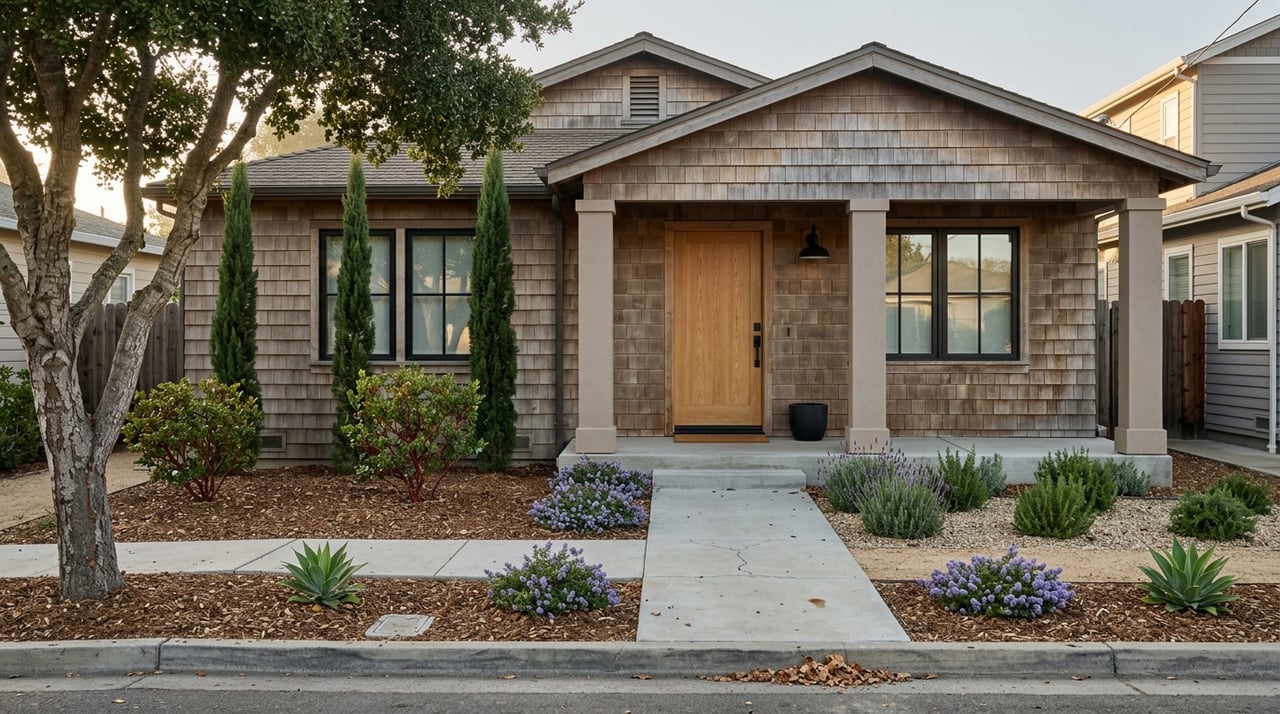
Looking for a place where coastal walks, small-scale village life, and protected open space shape your everyday routine? Cambria offers a quieter Central Coast lifestyle that feels distinct from larger beach towns, with a setting defined by Monterey pines, creek areas, ocean views, and surrounding grazing land. If you are considering a move, a second home, or a long-term lifestyle change, this guide will help you understand how Cambria works day to day and what to keep in mind before you buy. Let’s dive in.
Why Cambria Feels Different
Cambria is an unincorporated community in San Luis Obispo County, about 20 miles north of Morro Bay and 23 miles south of the Monterey County line. According to county planning, the community is shaped by scenic coastline, creekside areas, Monterey pine forest, and open grazing land, which gives it a strong sense of place.
It is also a relatively small community. U.S. Census QuickFacts lists Cambria’s 2020 population at 5,678, and recent ACS data shows 45.0% of residents are age 65 and older. That helps explain why many buyers experience Cambria as slower paced, quieter, and more relaxed than more built-out coastal markets.
Cambria’s Village Layout
One of the most helpful things to know about living in Cambria is that daily activity is organized around three main commercial areas: East Village, West Village, and Moonstone Beach. County coastal policy identifies each area as serving a different role, which makes the town easy to understand once you spend time there.
East Village Basics
East Village functions as Cambria’s principal shopping and service center. In practical terms, this is where you are more likely to take care of everyday errands and basic needs.
County planning also notes that East Village parking is constrained by small parcels and floodplain conditions along Santa Rosa Creek. For you as a resident or buyer, that means the village charm is real, but convenience can come with a small-town scale and layout.
West Village Atmosphere
West Village is more oriented to visitor-serving uses such as craft stores, gift shops, and eating establishments. It contributes a big part of Cambria’s walkable, browse-and-linger feel.
If you enjoy a town center that feels personal rather than commercialized, West Village often reinforces that appeal. It reflects the county’s emphasis on village-scale business activity rather than suburban-style expansion.
Moonstone Beach Daily Appeal
Moonstone Beach is Cambria’s lodging corridor, with restaurants, hotels, and motels between Highway 1 and the ocean. Even if you are not staying in that area, it plays a major role in everyday life because it gives residents easy access to one of the community’s most recognizable coastal settings.
For many buyers, this area helps define what living in Cambria actually feels like. It is where ocean air, walking paths, and scenic views become part of your regular routine rather than an occasional outing.
Outdoor Living in Cambria
Cambria’s lifestyle is closely tied to open space and shoreline access. If being outdoors is part of how you want to spend your mornings, weekends, or retirement years, that is one of the town’s strongest draws.
Moonstone Beach Boardwalk
Visit Cambria describes the Moonstone Beach Boardwalk as a one-mile boardwalk running from the north end of Cambria to Leffingwell Landing. California State Parks also identifies the Moonstone Bluff Trail as an accessible one-mile beach boardwalk stretching from the north end of Cambria to the mouth of Santa Rosa Creek.
The surrounding shoreline supports beach walking, hiking, tidepooling, kayaking, fishing, surfing, elephant seal viewing, and seasonal whale watching, according to State Parks. That range of activities gives Cambria a lifestyle advantage for buyers who want daily access to the coast without needing to leave town.
Fiscalini Ranch Preserve
Fiscalini Ranch Preserve is another major reason people are drawn to Cambria. The Cambria Community Services District describes it as a 430-acre preserve bounded on the west by the Pacific Ocean and divided by Highway 1 into East Ranch and West Ranch, while Visit Cambria describes it as 437 acres. The acreage varies slightly by source, but both point to the same takeaway: it is one of Cambria’s defining open-space assets.
The preserve includes protected forest, riparian habitat, grasslands, and ocean-bluff views, with eight trail entrances noted by Visit Cambria. For residents, that means you can move from neighborhood streets to trails and coastal scenery with unusual ease.
Local Parks and Recreation
County planning identifies Shamel Park and Lampton Cliffs Park as important local recreation spaces. Shamel Park includes picnic areas, play equipment, a swimming pool, and coastal access.
Lampton Cliffs Park offers trails, landscaping, benches, and beach access. Together, these spaces add to Cambria’s everyday livability and support a lifestyle centered on simple outdoor routines rather than high-density amenities.
Community Character and Culture
Cambria’s identity is not just about scenery. It also has a visible village culture that feels playful, creative, and rooted in local tradition.
A good example is the annual Scarecrow Festival. Visit Cambria says the event places more than 200 scarecrows throughout East Village, West Village, Moonstone Beach, and San Simeon, giving the community a distinctive and arts-forward seasonal atmosphere.
That kind of event matters because it shows how public space is used in Cambria. Instead of large-scale entertainment districts or major urban events, the town’s character comes through local traditions and small-scale experiences spread across the village.
Everyday Conveniences to Expect
Cambria offers the core services many buyers want, but on a smaller scale than larger coastal communities. That is important to understand if you are relocating from a metro area or comparing Cambria with bigger Central Coast markets.
Coast Unified School District serves the community and includes Cambria Grammar School, Santa Lucia Middle School, Coast Union High School, and Leffingwell High School. The Cambria Library on Main Street offers computers, Wi-Fi, wireless printing, passport services, and a regular events calendar.
Those details may seem simple, but they help frame what daily life looks like. You have access to key community resources, though the overall experience remains village-sized and intentionally less built out.
What Buyers Should Know About Growth
One of the most important practical issues in Cambria is water and wastewater service availability. The Cambria Community Services District says it is not issuing new residential or commercial water or wastewater connections at this time.
The county also notes that both the CCSD and County maintain vacant-parcel waitlists, with the CCSD waitlist served first. If you are considering vacant land or a new-build plan, utility service availability may be just as important as the property itself.
Why This Matters in a Purchase
For an existing home, Cambria’s limited-growth framework is often part of the appeal. It helps preserve the small-scale character that draws buyers to the area in the first place.
For land or redevelopment opportunities, though, due diligence becomes especially important. You will want a clear understanding of how service availability affects your timeline, options, and long-term plans before moving forward.
Who Cambria Often Appeals To
Cambria can be a strong fit if you want a quieter coastal lifestyle built around scenery, walking access, and village-scale commerce. It may also appeal if you are searching for a second home or retreat where the setting feels established and protected rather than rapidly expanding.
It may be less ideal if you want suburban convenience, broad new-development options, or a faster-paced environment. Much of Cambria’s appeal comes from its limits, and the right fit often depends on whether you see those limits as part of the value.
The Bottom Line on Living in Cambria
Cambria stands out for its blend of small-village commerce, accessible coastline, and meaningful open space. County planning describes a community built around scenic resources, visitor-serving uses, and village-scale districts rather than suburban growth, and that description aligns closely with what many buyers experience on the ground.
If you are drawn to a more measured pace and want a Central Coast town where nature is part of your daily rhythm, Cambria deserves a closer look. When you are ready to explore coastal homes, village properties, or opportunities throughout the Central Coast, connect with Home and Ranch SIR for knowledgeable, relationship-driven guidance.
FAQs
What is daily life like in Cambria, California?
- Daily life in Cambria centers on a slower pace, village-scale shopping and dining, and easy access to the coast, parks, and open space.
What are the main commercial areas in Cambria?
- Cambria’s main commercial areas are East Village, West Village, and Moonstone Beach, each serving a different role in the community.
What outdoor activities are available in Cambria?
- Cambria offers beach walking, hiking, tidepooling, kayaking, fishing, surfing, wildlife viewing, seasonal whale watching, and trail access at Fiscalini Ranch Preserve.
What should Cambria buyers know about water service?
- The Cambria Community Services District says it is not currently issuing new residential or commercial water or wastewater connections, which is especially important for vacant land or new-build plans.
Does Cambria have everyday services for residents?
- Yes. Cambria has community services such as local schools through Coast Unified School District and the Cambria Library, which offers computers, Wi-Fi, printing, passport services, and events.
