Wondering what it’s really like to live near Arroyo Grande’s Village? If you are drawn to a place that feels walkable, historic, and connected to the broader Central Coast, Arroyo Grande offers a setting that stands out. From creekside paths and local shops to nearby parks and easy coastal access, this guide will help you understand how the Village and surrounding neighborhoods come together in everyday life. Let’s dive in.
Arroyo Grande Village at a Glance
Arroyo Grande traces its roots to 1897, with incorporation following in 1911. Today, city planning still treats the Village as the historic downtown and central mixed-use district, with a strong focus on pedestrian activity, neighborhood character, and protecting the area’s small-town and rural setting.
That planning framework helps explain why the Village feels different from a typical commercial corridor. Instead of reading like a strip of shops, it functions more like a compact town center where dining, shopping, community spaces, and housing all connect.
Village Character and Daily Feel
The Village Core is intended to support a mix of commercial, office, residential, recreational, and community uses. In practical terms, that means you can experience several parts of daily life within the same area, rather than needing to drive from one disconnected zone to another.
Branch Street remains the main street through the Village, and the city’s design guidelines also point to Short Street, walkways, and creekside promenades as part of the circulation network. That layout supports a more pedestrian-oriented experience and gives the district a rhythm that feels easy to explore on foot.
Why the Village Feels Distinct
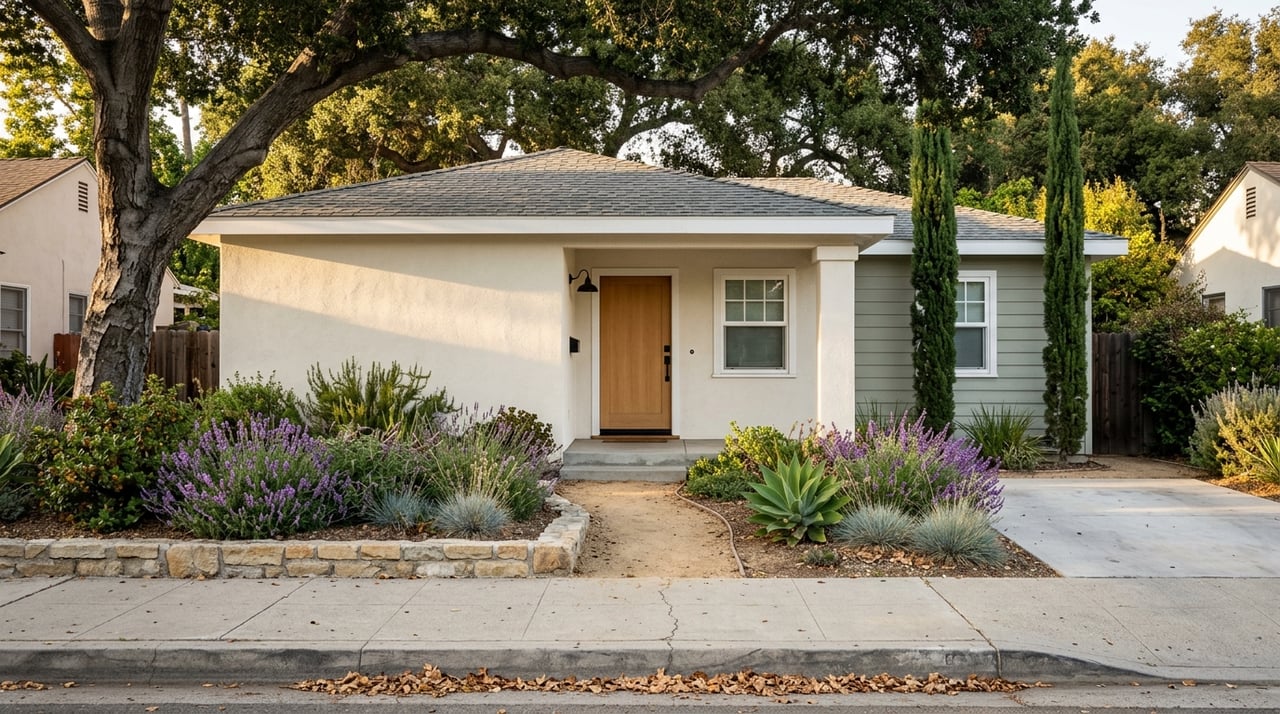
A big part of the Village’s identity comes from its historic setting. The nearby Village Residential area is described by the city as having many historic homes and large mature trees, while development farther out is generally more modern.
City planning also treats historic structures, creek edges, natural areas, and open-space buffers as important pieces of Arroyo Grande’s identity. Those features do more than shape the scenery. They help preserve a sense of continuity between the historic core and the neighborhoods around it.
Walkability in the Village
By Central Coast standards, the Village is very walkable. City policy explicitly emphasizes pedestrian-oriented activity, and the core includes walkways, creekside paths, parks, and event spaces that encourage you to move through the area at a slower pace.
If you enjoy being able to stroll to a coffee shop, browse a few local businesses, or spend time in a public square, that setup is a meaningful part of life here. It creates an everyday experience that feels more connected and less rushed.
Shops, Dining, and Local Businesses
The Village Core is planned for specialty retail, art galleries, bookstores, antique shops, flower shops, commercial services, restaurants, convenience markets, cultural facilities, and bed-and-breakfast inns. The city also encourages outdoor dining and pedestrian-scale features like trees, benches, lighting, and directional signage.
That mix supports a locally oriented business environment. A Village business directory highlights a curated marketplace, a family bakery, an independent bookstore, a fine-art gallery, and a brewery with a restaurant, giving you a sense of the district’s day-to-day flavor.
A More Local Pace
For many buyers, this kind of business mix matters because it shapes how a place feels beyond the home itself. In Arroyo Grande’s Village, the experience is less about big-box convenience and more about local rhythm, repeat visits, and recognizable gathering spots.
That can make the area especially appealing if you value character, small businesses, and a downtown environment that feels active without feeling oversized.
Parks and Outdoor Access Near the Village
Arroyo Grande places a strong emphasis on parks, open space, and community facilities. Near the Village, you will find Centennial Park, Heritage Square, Elm Street Park, Hart-Collett Memorial Park, Howard Mankins Hoosegow Park, James Way Habitat & Wildlife Preserve, and other small parks and facilities.
This concentration of public spaces adds a lot to daily life. Whether you want a quick walk, a place to gather, or easy access to outdoor recreation, the parks near the Village help expand what the neighborhood offers.
Centennial Park and the Swinging Bridge
Centennial Park, located at Olohan Alley and Short Street, is set up for creekside picnics and small ceremonies. It also includes the historic Swinging Bridge, which is open to foot traffic and is noted by the city as the only one of its kind in California.
That combination of creekside setting and historic landmark gives the area one of its most recognizable features. It is the kind of place that helps define Arroyo Grande’s sense of place for both residents and visitors.
More Nearby Green Space
Hart-Collett Memorial Park is just a short walk from the Village. Howard Mankins Hoosegow Park overlooks the Village and contains the old city jail built around 1910, adding another layer of local history to the landscape.
James Way Habitat & Wildlife Preserve offers a 1.7-mile loop trail for hiking, running, and walking, with dogs allowed on leash. Elm Street Park adds a playground and a large barbecue area, while Elm Street Dog Park is described by the city as the only off-leash dog park in the Five Cities.
Events and Community Rhythm
Heritage Square Park and Bandstand serve as a key community gathering place throughout the year. The city’s summer concert series is a recurring free event there, and Centennial Park hosts a farmers market on most Saturdays with frequent live music.
These regular events help create a steady community rhythm rather than just occasional activity. If you are trying to picture everyday life, that matters. It means the Village is not only visually charming, but also actively used as a public meeting place.
Seasonal Identity in the Village
One small but memorable detail is the Village redwood tree at the entrance, which is lit year-round for local and national occasions. That tradition acts as a visible seasonal marker and reinforces the Village’s identity as a shared civic space.
Details like this often shape how a place feels over time. They are not major infrastructure features, but they do contribute to a stronger sense of familiarity and local tradition.
Surrounding Neighborhoods and Transitions
The neighborhoods around the Village help explain why Arroyo Grande can feel both historic and lived-in. The city’s historic context places several early residential areas near Branch and Bridge streets, north of Allen Street to Arroyo Grande Creek, on Crown Hill, and south of Highway 101 near Fair Oaks Avenue.
These areas help the Village transition into surrounding residential neighborhoods without losing its historic center. As you move outward, the pattern shifts from older homes and mature trees to more modern development, but the core still anchors the broader area.
What Buyers Often Notice
If you are comparing parts of Arroyo Grande, one of the biggest differences is the contrast between the Village-adjacent blocks and newer edges of town. Near the Village, you are more likely to notice established streetscapes, mature landscaping, and historic context.
Farther out, the feel generally becomes more contemporary. Neither is inherently better. It simply comes down to whether you want to be closer to the historic core, community spaces, and pedestrian activity, or prefer a more modern neighborhood setting.
Access to Highway 101 and the Coast
Arroyo Grande’s location is a major part of its appeal. City circulation documents show that US 101 provides regional access, with direct freeway connections at Oak Park Boulevard, Halcyon/Brisco, and Grand Avenue/Branch Street.
Grand Avenue also serves as one of the gateway routes for recreational travel west from US 101 to the Pacific coastline. That makes the Village and surrounding neighborhoods feel well connected to both inland South County and nearby coastal destinations.
Getting to Pismo Beach and Grover Beach
Beach access is typically routed west through the Grand Avenue and Highway 1 corridor into Grover Beach and Pismo Beach. That straightforward connection makes it easier to enjoy the coast as part of regular life, not just as an occasional weekend plan.
Pismo State Beach adds to that broader lifestyle picture, with access to camping, hiking, swimming, surf fishing, and the Monarch Butterfly Grove. For many buyers, the appeal of Arroyo Grande includes this balance between small-town setting and quick access to larger Central Coast recreation.
Who the Village Lifestyle Suits
Life near Arroyo Grande’s Village can be a strong fit if you want a neighborhood experience shaped by history, walkability, and public spaces. It may also appeal to you if you value local businesses, community events, and a setting that connects easily to both Highway 101 and the coast.
The surrounding neighborhoods broaden your options. Some buyers are drawn to the older residential areas and mature trees near the core, while others prefer to stay close to the Village but in more modern parts of town.
If you are exploring Arroyo Grande as a primary home, second home, or Central Coast lifestyle move, understanding these small differences can help you narrow your search with more confidence. When you want local perspective on Arroyo Grande and the broader Central Coast market, Home and Ranch SIR can help you find the right fit.
FAQs
How walkable is Arroyo Grande Village?
- Arroyo Grande Village is very walkable by Central Coast standards, with pedestrian-oriented planning, walkways, creekside paths, parks, and public gathering spaces in the core.
What is the neighborhood feel around Arroyo Grande Village?
- The area around the Village mixes historic homes, mature trees, and older blocks near the core with more modern development farther out.
What kinds of shops and dining are in Arroyo Grande Village?
- The Village is planned for specialty retail, galleries, bookstores, restaurants, convenience markets, cultural facilities, and other locally oriented businesses.
What parks are near Arroyo Grande Village?
- Nearby options include Centennial Park, Heritage Square, Elm Street Park, Hart-Collett Memorial Park, Howard Mankins Hoosegow Park, and James Way Habitat & Wildlife Preserve.
How easy is it to reach the beach from Arroyo Grande?
- Arroyo Grande has direct freeway connections and a westbound route via Grand Avenue toward Grover Beach, Pismo Beach, and the broader Pacific coastline.
