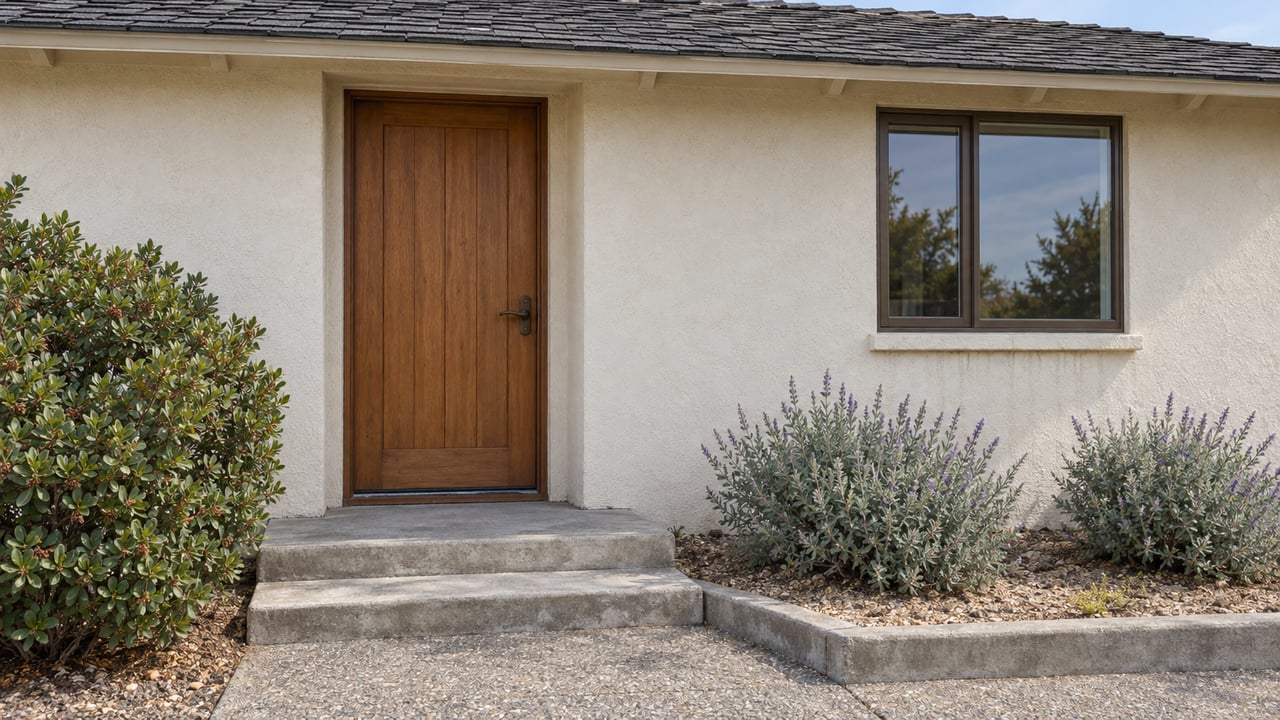
The number of homes in Pismo Beach allowed to operate as short-term rentals in ordinary residential neighborhoods has not moved since November 2023, and it is not going to move because a house changes hands. The city stopped issuing new residential short-term rental licenses that month. At the time, it counted roughly 28 properties already licensed under the old rules. That count is the entire category. It does not expand when a buyer closes on a well-located house that used to bring in nightly rental income, because the license belongs to the person who held it, not to the address.
For anyone running numbers on a Pismo Beach purchase with rental income anywhere in the plan, that single fact settles more of the deal than the inspection report will.
A Ceiling, Not a Waiting Line
The freeze traces back further than most buyers assume. Pismo Beach's original short-term rental ordinance, adopted in 2018, was described at the time as ahead of most coastal cities in California. By 2022, the city had accumulated enough complaints about noise, parking, and unpermitted rentals that the council opened a pause on new applications while a task force studied what was going wrong. That pause got extended more than once, running through the rest of 2023 while the city also finished a broader update to its Local Coastal Program. In November 2023, the council adopted Ordinance O-2023-006, the rulebook still in effect today. Under it, the city stopped accepting new residential short-term rental applications altogether.
That history matters for how a buyer should read the freeze. This was not a staffing backlog or a temporary hold waiting on a budget cycle. It was the outcome of a multi-year process folded into the city's coastal planning framework, which is a slower and more deliberate kind of policy than a simple moratorium.
Three Categories, One Doing Most of the Work
Pismo Beach's municipal code actually separates short-term lodging into three legal products, and most buyers use "vacation rental" as a catchall for all of them.
| Category | Owner must be on-site | Where it's allowed | Annual limit |
|---|---|---|---|
| Vacation Rental | No | Commercial and mixed-use zones, including the downtown core | No stated annual cap |
| Short-Term Rental | Yes, as primary residence | Residential zones (R-1, R-2, R-3, and similar) | Capped at 182 non-owner-present nights a year |
| Homestay | Yes, present during the stay | Residential zones | No cap on rental days, since the owner is present |
A Vacation Rental does not require the owner to live there, but it is confined to commercial and mixed-use parcels, a small share of the city's map. The residential streets where most relocating families and retirees actually shop for a house only qualify for Short-Term Rental or Homestay licensing, and both require the owner to treat the home as a primary residence. A detached, non-owner-occupied whole-home rental in a typical single-family subdivision simply is not an option under current rules, regardless of what a previous owner may have been doing there.
Shell Beach illustrates the point well. It was developed as a resort subdivision starting in 1926, annexed into the city in 1964, and still functions as its own bluff-top submarket with a commercial strip along Shell Beach Road and a string of small blufftop parks. Its residential blocks fall under the same license freeze as anywhere else in Pismo Beach. Proximity to the water changes what a house is worth. It does not change which rental category applies to it.
The Detail That Doesn't Show Up in the Listing
Here is where the freeze catches buyers mid-transaction. A Short-Term Rental license in Pismo Beach is tied to the individual property owner, not the property itself, and it does not transfer at sale. If a house being purchased currently operates as a licensed short-term rental, that license belongs to the seller. A new owner has to apply fresh, and under the current freeze, that fresh application would not be approved for a residential license. The listing can describe rental history all it wants. The permit does not come with the keys.
There is a narrower wrinkle around accessory dwelling units. An ADU cannot operate as its own independent short-term rental. It can, however, count as the owner's primary residence if the owner lives in the ADU while renting the main house out as a licensed homestay, which is a specific structure worth confirming with the city rather than assuming.
Enforcement has real teeth behind it. Violations start at a minimum $1,500 fine, jump to $3,000 for a second violation within a year, and reach $5,000 for each subsequent violation in that same year, with every rental night in violation counted separately. Advertising an unlicensed property on a platform like Airbnb or Vrbo counts as a violation on its own, before a single guest ever checks in.
What a Rental Pro Forma Actually Needs
Even for one of the roughly 28 properties still licensed, the math includes a tax stack that's easy to underweight. Guests pay a Transient Occupancy Tax of 11 percent, adopted through Measure B-20, plus a 2 percent Lodging Business Improvement District assessment, plus a county tourism marketing district assessment on top of that, landing around 14.5 percent combined on the nightly rate. Anyone modeling income off a licensed property needs to build that stack into cash flow rather than treating the sale as conveying uninterrupted rental upside.
The same instinct to check the number underneath the number applies to price data. Over the three months ending in the spring of 2026, Redfin recorded a median sale price of $1.4 million in Pismo Beach, up 4.1 percent year over year, with a median price per square foot of $884 and homes selling in a median of 42 days. A separate listing-price tracker for September 2026 shows a different picture: a median list price of $1.39 million, down from the prior year, a lower $664 per square foot figure, and a longer 85-day median time on market. Sold prices and list prices are not the same measurement, and the gap between them is a reminder that a single headline figure, whether it's a median price or a license count, tends to hide the mechanics that actually drive it.
Before Contingencies Come Off
A few concrete steps settle most of the uncertainty before it becomes an escrow problem:
- Check the specific address against the city's public list of licensed short-term rental properties, available through the city's vacation rental and short-term rental page, rather than relying on what a listing description implies.
- Ask the seller directly for the license number and confirm its renewal status with the Planning Division.
- Confirm the property's zoning designation lines up with a Short-Term Rental or Homestay eligible zone, since downtown commercial parcels operate under entirely different rules than a residential subdivision a few blocks away.
- If rental income is part of the plan, model it under the owner-occupied Short-Term Rental or Homestay structure rather than assuming an unrestricted whole-home rental is available by default.
A Few Questions Worth Asking
If I buy a home that's currently a licensed short-term rental, do I inherit the license? No. The license is tied to the individual owner who holds it, not the property, and it does not transfer at closing.
Can I turn a new ADU into its own short-term rental? No. Pismo Beach does not allow an ADU to operate as an independent short-term rental. It can serve as the owner's primary residence in a homestay arrangement, where the owner lives in the ADU and rents the main house.
Are there any Pismo Beach zones where a non-owner-occupied whole-home rental is still allowed? Yes, but only as a Vacation Rental in commercial and mixed-use zones such as the downtown core. That category does not require the owner to live on-site, but it sits outside the residential neighborhoods most buyers are actually shopping in.
Rental income potential is one of the easiest assumptions to get wrong in a Pismo Beach purchase, and it is one that a good pre-offer conversation resolves in a single phone call to the city. If you're weighing a Central Coast purchase with rental use in mind, or you just want a clear read on what a specific address can and can't legally do, Home & Ranch SIR can walk the zoning and licensing picture with you before you write an offer.
